This guide leans on ingredient-label scrutiny. No lab tests, no sponsored picks — just the skill that underlies everything on this site.
Last updated: September 2026.
The front of the package is advertising. The ingredient list is the truth. Here’s how to read it in about ten minutes.
1. Ingredients are listed heaviest-first
By law (in the U.S. and EU), cosmetic ingredients appear in descending order of weight — until you hit 1%, after which they can appear in any order. Translation: the first five ingredients tell you most of the story. If ‘aqua (water)’ is first and the oils you came for are last, you’re buying scented water in a nice jar.
2. Learn the INCI names
Ingredients are listed by their INCI name — the international standard, usually Latin for plants. Butyrospermum parkii is shea butter. Simmondsia chinensis is jojoba. It looks intimidating; it’s just a second language with about twenty words you’ll see over and over. Once you learn the common ones, labels stop being walls of text and start being readable.
3. ‘Fragrance’ is a loophole
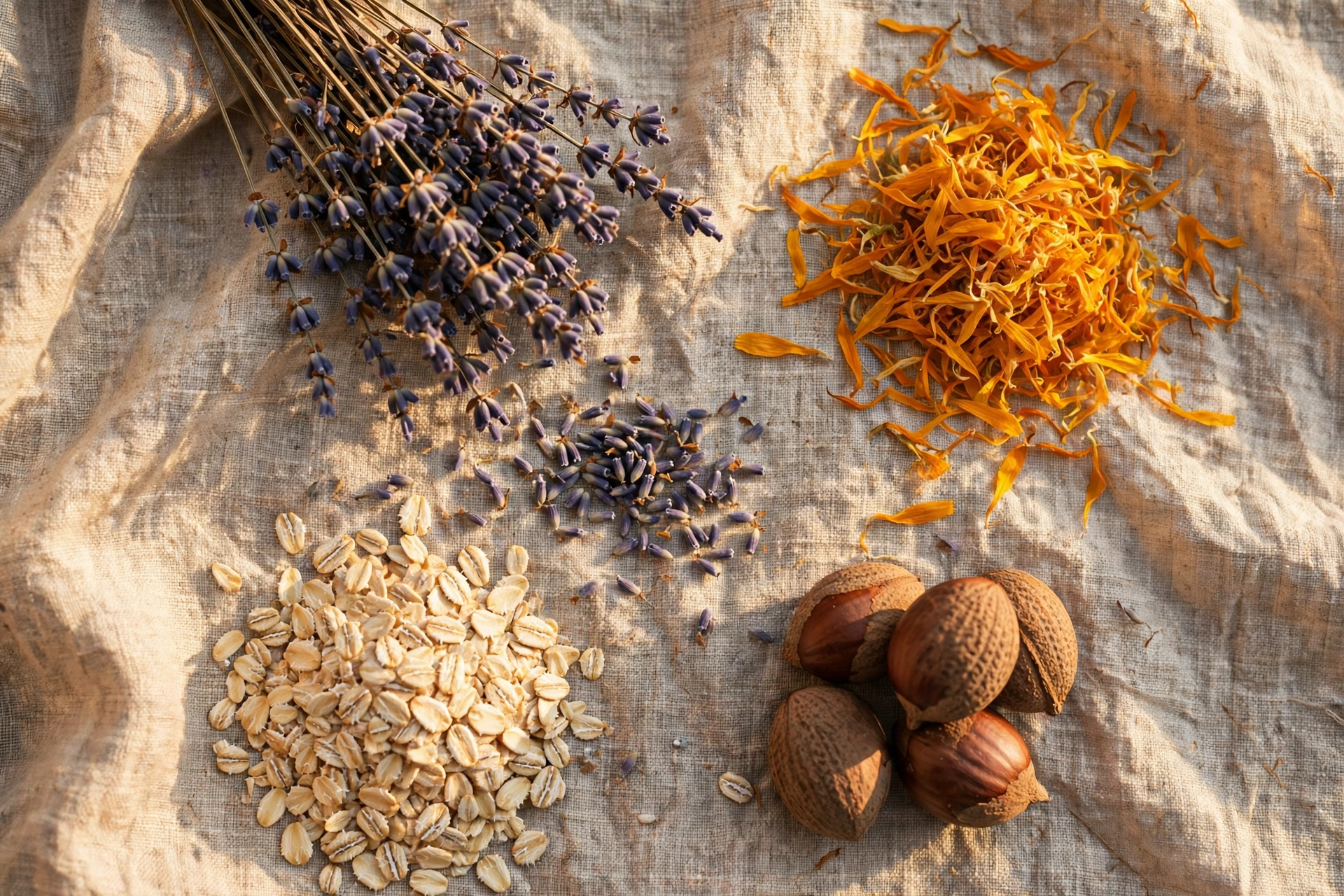
Here’s the big one. A single word — ‘fragrance’ or ‘parfum’ — can legally stand in for dozens of undisclosed scent compounds. Makers who list their actual scent ingredients (lavandula angustifolia oil, not ‘fragrance’) are choosing transparency over convenience. That’s a signal. When you see ‘fragrance’ with no further detail, you’re not being told what’s in the product — and now you know you’re not being told.
4. Short lists beat long lists — usually
A five-ingredient balm is easier to evaluate than a thirty-ingredient lotion. That doesn’t make long lists bad (a good emulsion needs its emulsifiers), but every ingredient should be earning its place. If you can’t figure out why something’s in there, that’s the maker’s failure, not yours.
5. Certifications are claims — check them
‘Organic,’ ‘cruelty-free,’ ‘vegan’ — these mean specific things when they’re certified (USDA Organic, Leaping Bunny, and the like) and mean whatever the marketing department wants when they’re not. Look for the certifying body’s name or logo. ‘Made with organic ingredients’ and ‘certified organic’ are different sentences.
6. The preservative question
Anything containing water needs preservation — that’s chemistry, not a conspiracy. ‘Preservative-free’ on a water-based lotion should make you more suspicious, not less. The question isn’t whether a product has preservatives; it’s which ones, and whether the maker names them.
The first-five rule (your takeaway)
Read the first five ingredients. If you recognize them and like what you see, keep reading. If you don’t, you’ve already learned enough.
Some links may earn us a commission. It never decides what we write — see our disclosure.